

Strawberry Moon lights up UAE, won’t return until 2043
Rare lunar standstill creates historic low-angle moonrise
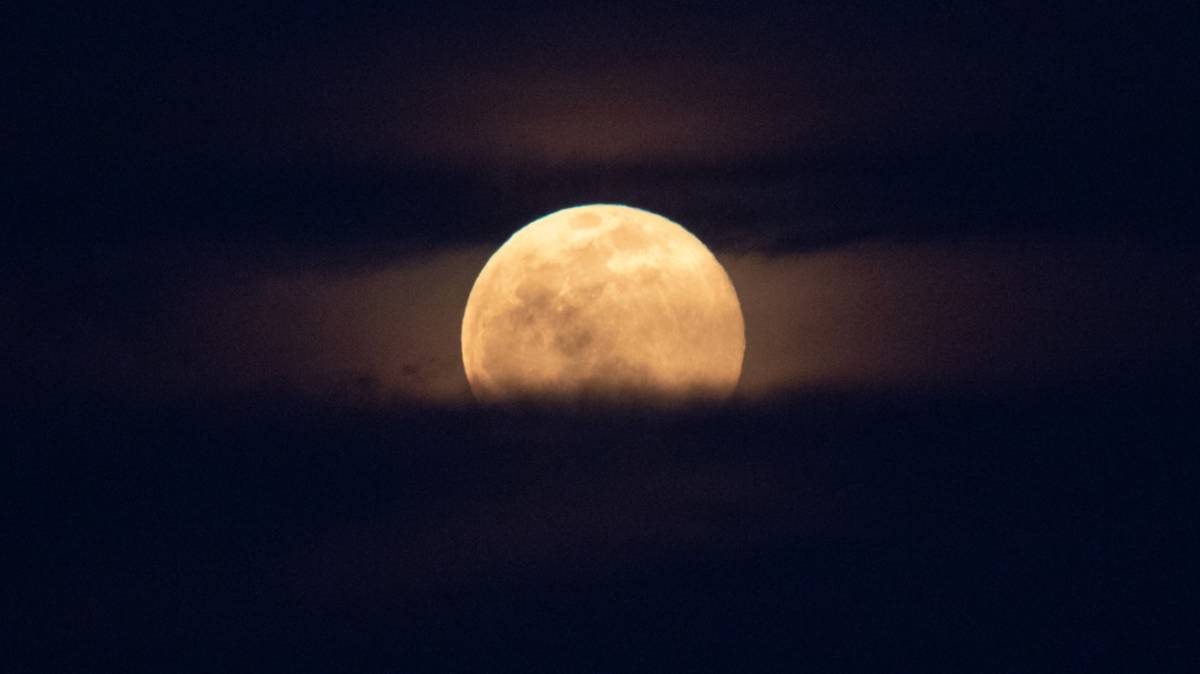
DUBAI: UAE residents were treated to a rare astronomical event on Wednesday night as the Strawberry Moon 2025 rose across the Emirates in a stunning low-horizon spectacle.
The June full moon, traditionally named for the strawberry harvest rather than its colour, briefly appeared to have a pinkish hue when it crested the eastern sky, due to atmospheric dust and light scattering. While it quickly shifted to a warm orange glow, the initial blush captivated skywatchers from Dubai to Abu Dhabi.
This year’s event was not just another full moon. It coincided with a major lunar standstill – a phenomenon that occurs only once every 18.6 years – making this the lowest full moon visible in the Northern Hemisphere since 2006.
Rare low angle
The lunar standstill caused the moon to rise and set at its most extreme points on the horizon. In the UAE, the moon first became visible at around 7:32PM on Wednesday, June 11, and remained in the sky until early Thursday morning.
Astronomy groups across the country had been anticipating this alignment, with many encouraging the public to head to beaches, deserts or rooftops for unobstructed views.
Lunar illusion effect
As the moon lingered close to the horizon, it appeared larger than usual – a visual trick known as the "moon illusion." This was particularly striking given the full moon's unusually low arc across the sky. “It’s the lowest full moon we’ll witness in this region until 2043,” Khadijah Hasan Ahmed, operations manager at the Dubai Astronomy Group told GulfNews.
Strawberry Moon
The term “Strawberry Moon” originates from Native American traditions marking the strawberry harvest season. Other cultures also recognise it under different names, such as the Rose Moon or Green Corn Moon.
Despite misconceptions, the moon doesn’t actually turn pink – though the unique atmospheric conditions sometimes create that impression.
The next opportunity to witness a similar celestial configuration won’t come again until 2043, making this year's event a significant visual and cultural moment for astronomy enthusiasts across the UAE.